
Browse this field: EV Lab
Product overview
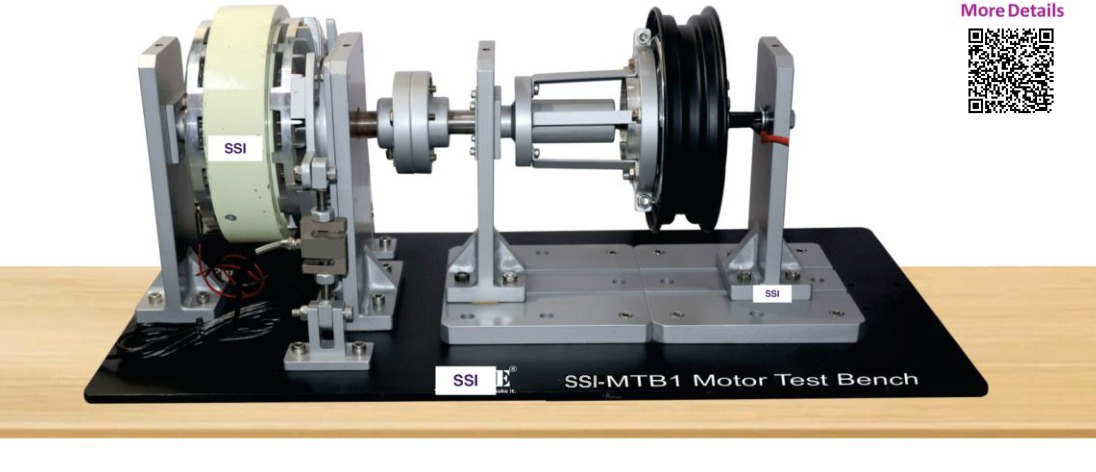
The SSI-MTB1 guide describes speed and torque control, dynamic-load simulation and data recording. Its experiment list includes acceleration, steady-state and coast-down testing. Specify the motor interface, operating envelope, loading method and required data channels to define the bench configuration.
Specifications & ordering details
Use these parameters to define your requirement. The quotation confirms the exact supplied specification.
| System / method | EV teaching and measurement system |
|---|---|
| Catalog model | SSI-MTB1 |
| Teaching feature | Speed and torque control |
| Teaching feature | Dynamic-load simulation |
| Teaching feature | Data recording and graph plotting |
| Training model and required experiments | Specify with your requirement. |
| Motor, battery and instrument scope | Specify with your requirement. |
| Laboratory space, utilities and installation needs | Specify with your requirement. |
Research applications
- Motor performance studies
- Dynamic-load experiments
- Drive-system research
Before you order
- Specify the course experiments and included teaching modules.
- Confirm instrument, motor or battery scope and interfaces.
- Provide installation space, utilities and documentation needs.
Product documents
View the source catalog for this offering. Share your instrument model, configuration and application to request the relevant specification or material documentation.
View Research & Training Equipment Guide — page 25 ↗Download PDFSelection questions
How do I check the instrument interface?
Share the instrument make and model, sample geometry, optical or beam path, mounting arrangement and drawings. The cell and instrument interfaces must be reviewed together.
Which experimental conditions are needed?
Specify temperature, pressure, atmosphere or electrolyte, and electrical connections. Confirm sample access, windows, fittings and accessories for the selected method.
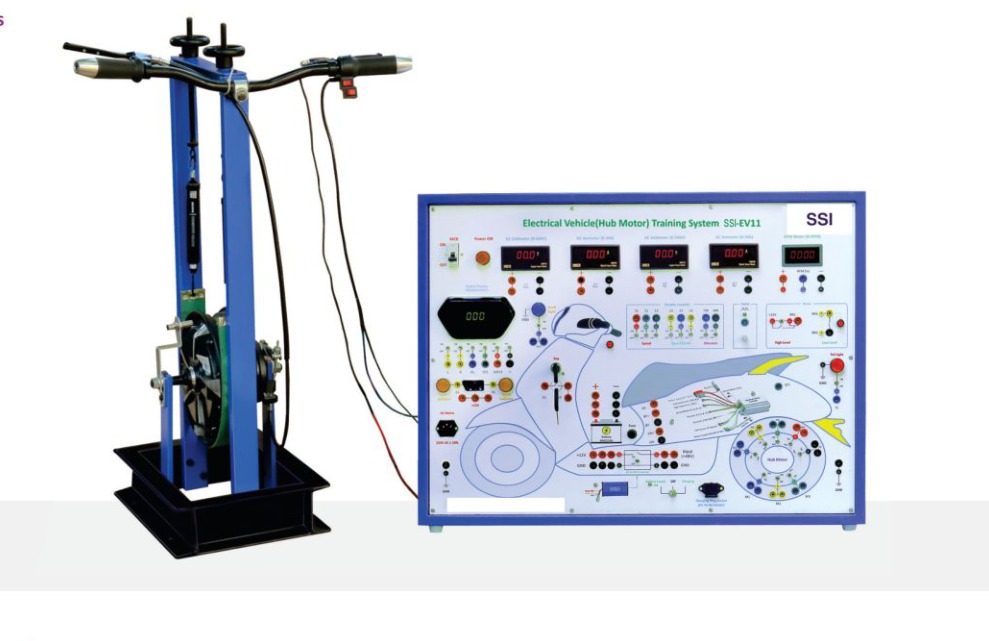 SSI-EV11 Hub-Motor EV Training System
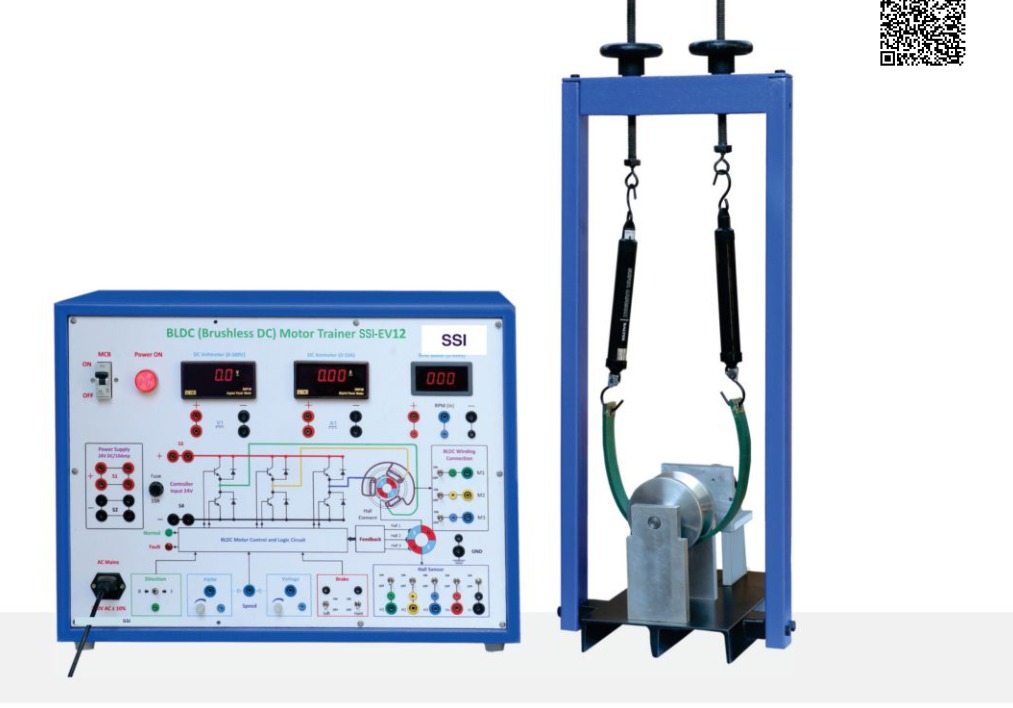 SSI-EV12 BLDC Motor Trainer
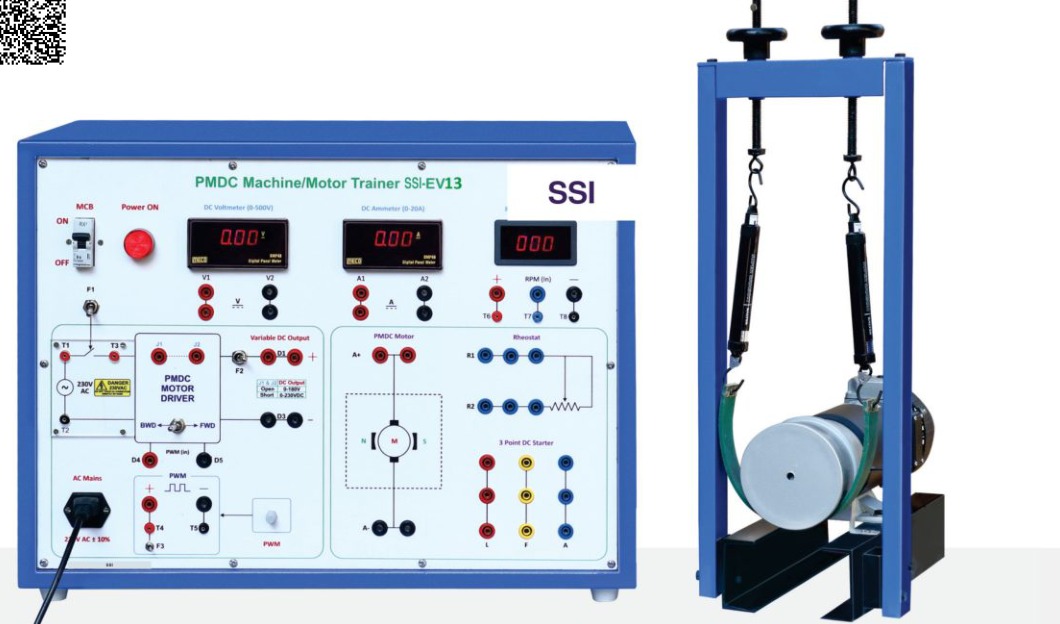 SSI-EV13 PMDC Motor Trainer
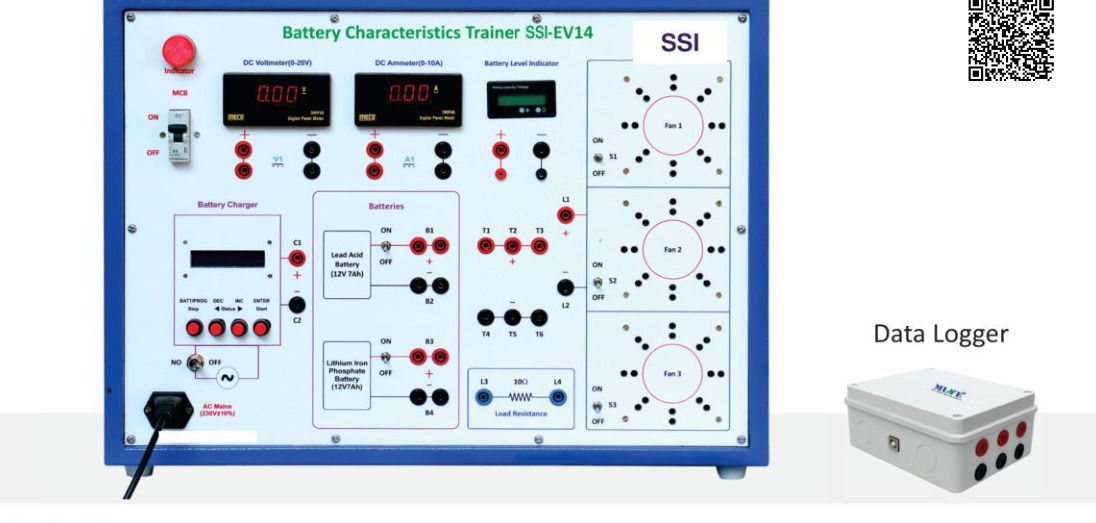 SSI-EV14 Battery Characteristics Trainer